
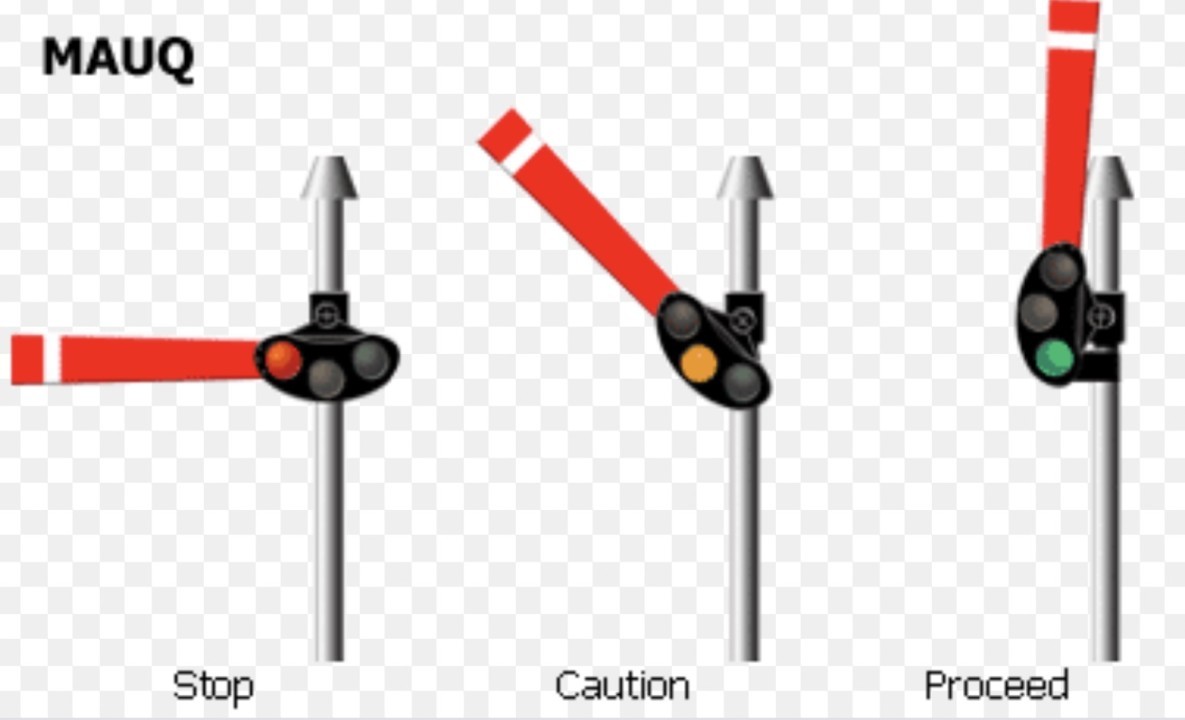
While I was waiting for posting orders, I visited railway station in Aravalli, the remote village near Bhimavaram Town where we lived in coastal Andhra Pradesh to learn about what is ‘Railway Signalling’ is all about. That railway station is provided with MAUQ (Multi Aspect Upper Quadrant) mechanical signalling with double wire system used for Signals operation and mechanical lever frames and rodding used to operate Points (a pair of movable rails to change the direction of train movement). Mechanical detector mechanism used to lock and detect the points. It was very interesting to learn about inter cabin control based on slot system with three different Operating staff involved in train operations. Interlocking between various Signalling functions within the station limits is achieved by mechanical locking frames. Signalling system is based on ‘Absolute Block System’ principles with use of Single Line Tokenless Block Instruments for communication with adjacent stations and ensuring safety in train operations. It was amazing to know about the complexity of electrical circuitry involved in Single Line Tokenless Block Instruments. Telecommunication overhead lines were used as a media for transferring information between a pair of block instruments.
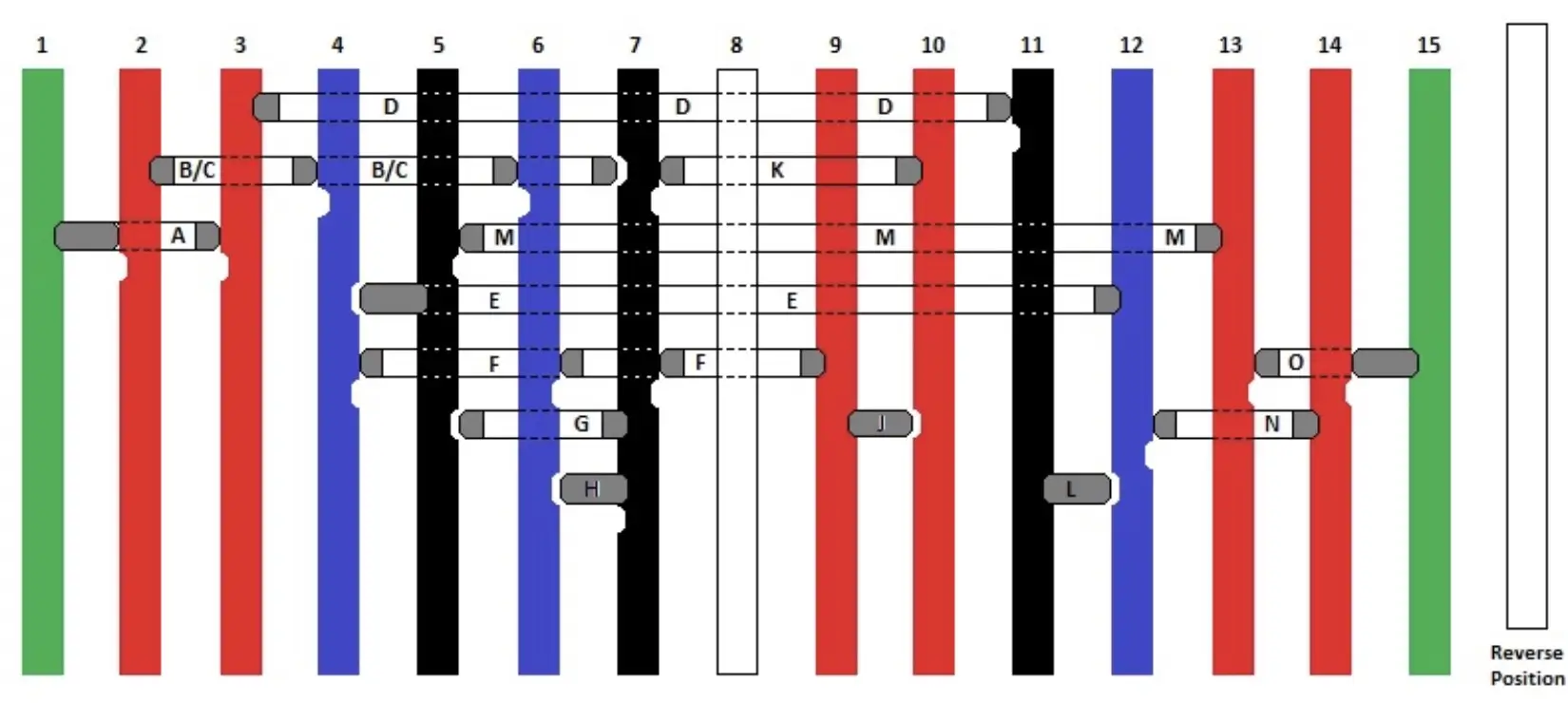
As you can see below pictures of a ‘Mechanical Lever Frame’ and ‘Locking Frame’ with the complexity and beauty of ‘Mechanical Interlocking’ and how Signalling principles were used to be transformed during those ‘Mechanical Interlocking’ times. Now a days all the Signalling Interlocking rules are translated into ‘Application Logic’ programs in Computer Based Interlocking (CBI).

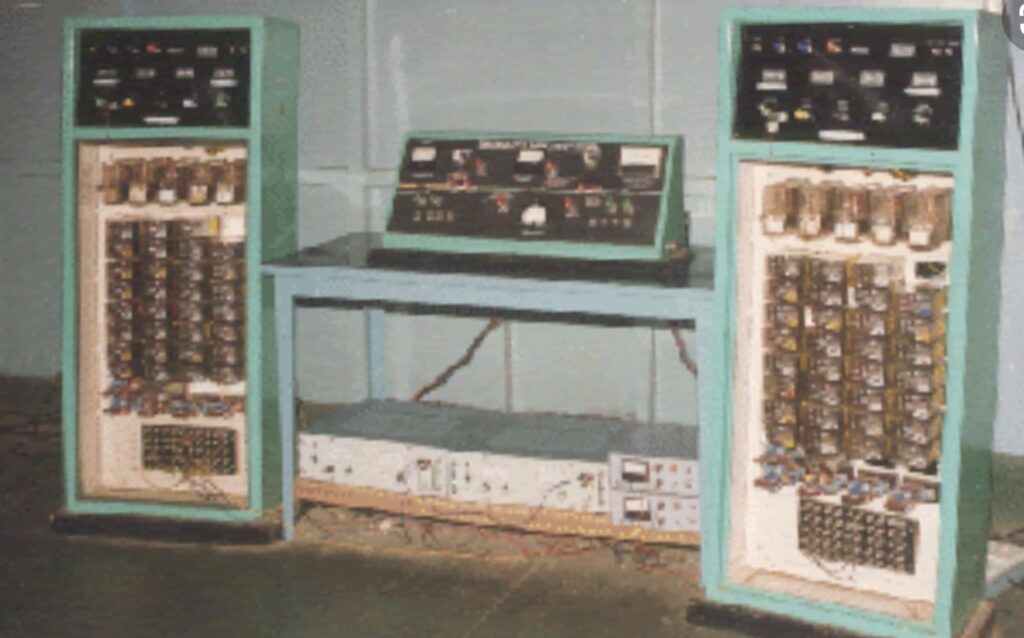
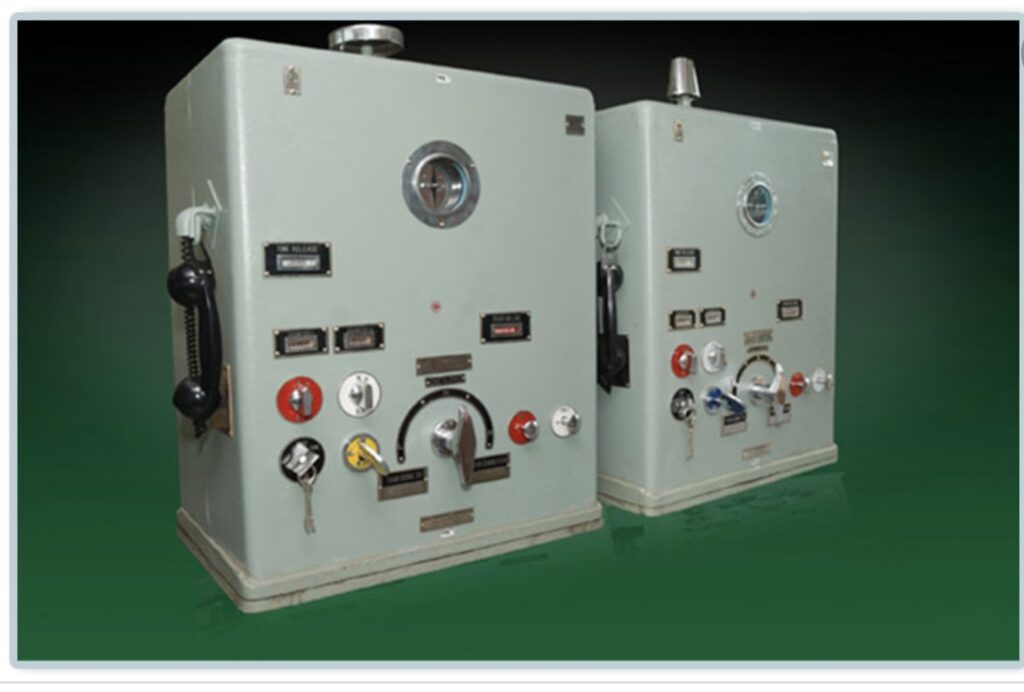
Below are the pictures of Daido Single Line Tokenless Block Instrument used in Railway Electrified areas and Podanur (PTJ) Push Button Tokenless Single Line Block Instrument used in non-RE areas. The amount of electrical circuitry, logical sequence of train operations involved and more importantly the complexity involved to find faults is significant.
Our training of 18 months started on 20th December 1995 after completing all joining formalities at Divisional headquarters office. Interestingly, during the medical examination in Railway Hospital, one of the senior railway employee suggested not to join the job as trains will literally travel over the heads of Signalling Maintenance staff and a lot of risk involved. We were (a training batch of 10) sent (after completing all joining formalities at Divisional headquarters office) to report to Senior Section Engineer/Signalling at Samalkot railway station in Vijayawada Division of South Central Railway. We travelled by 8046 – East Coast Express with a free railway pass (a privilege to all railway staff). I am fortunate to be selected by my guru (teacher) Sri T. Ramamohan Rao garu, SSE to be his assistant at work. We were involved in the ongoing work of provision of relay based interlocking (known as Panel Interlocking) system project at North Cabin of Samalkot Junction station. I used to assist my guru in designing Signalling plans, circuits (manually) for all external Signalling field functions. Relay Room circuit diagrams used to be designed at headquarters office. Use of computers and CAD was not prevalent at that time (except in Design offices at headquarters). I learnt a lot from my guru on various designs related to cable plans, Location Box wiring, Signal Lighting Circuits, Power Supply diagrams, Relay Circuits etc., Most importantly I learnt about attention to detail, dedication, commitment and meticulous planning.
Picture with my guru Sri T. Ramamohan Rao, an eminent Railway Signal Engineer who is still working.
After a couple of months, we were sent to Zonal Training Centre (ZTC), Secunderabad for a formal class room training for 6 months. It was a batch of around 35 from all the divisions of South Central Railway. It was a memorable experience interacting and learning with people from different backgrounds and culture. We all had a college like environment and had good memories of those days. We received training on various subjects of Railway Signalling ranging from Orthodox Signalling to Relay Based interlocking. I learnt about the beauty and complexity of Signal Engineering domain which itself is a combination of various engineering domains and how important it is for ensuring safety of train operation. I still remember those days when we struggled to understand the logic behind ZR3 circuit in Block Signalling subject and to understand the ‘Compensator’ related problems in mechanical signalling. We need to visualise train sequence of operations to fully understand the ZR3 circuit.
After theoretical training we again reported to respective divisional offices. I along with 10 other trainees reported to Deputy Chief Signal and Telecom Engineer (Dy. CSTE)/Rajahmundry, Sri Chandra Mohan (who is now working in Riyadh), who is managing the Railway Electrification (RE) project between Vijayawada – Visakhapatnam section. Fortunately I was again asked to work with my guru Sri T. Ramamohan Rao. We both used to work day and night on designing wayside signalling plans, drawings and circuits manually. It was that foundation and training that I received from my guru that helped me a lot in professional life and still stand on those values even today. I worked as a trainee in every railway station between Vijayawada – Tuni section with projects involving conversion of MAUQ to MACLS, provision of Panel (Relay) Interlocking, conversion of LQ to MACLS (between Samalkot Junction to Kakinada branch line). I need to remember those olden era experts who taught me basics of Signalling and who have dedicated their lives for the safety of railways by working day and night.
After a couple of months, we were sent to Zonal Training Centre (ZTC), Secunderabad for a formal class room training for 6 months. It was a batch of around 35 from all the divisions of South Central Railway. It was a memorable experience interacting and learning with people from different backgrounds and culture. We all had a college like environment and had good memories of those days. We received training on various subjects of Railway Signalling ranging from Orthodox Signalling to Relay Based interlocking. I learnt about the beauty and complexity of Signal Engineering domain which itself is a combination of various engineering domains and how important it is for ensuring safety of train operation. I still remember those days when we struggled to understand the logic behind ZR3 circuit in Block Signalling subject and to understand the ‘Compensator’ related problems in mechanical signalling. We need to visualise train sequence of operations to fully understand the ZR3 circuit.
Let me summarise the key points in my journey posted here in part 2:
For peers:
- Having seen both worlds of Railway Signalling evolution from where we can actually see end to end function Signalling equipment operation to a ‘Data driven’ software world where most of the things are ‘invisible’, we are fortunate to ‘live’ in rapid developments that are taking place in Railway Signalling.
- Most of us are constantly upgrading our skills so as to keep pace with the changes in Signalling technology and thus really enjoying what we are doing.
- We were able to successfully learn and up skill ourselves suitably to accommodate the ‘winds of change’ happening in our industry over the past 25 years. We will continue to learn.
For Railway Signal Engineers of this generation:
- Attention to minute detail, dedication, commitment and meticulous planning are very important skills for Signal Engineers.
- Appreciate the interesting science and technology behind Signal Engineering and learn how the domain evolved over a time from Mechanical Signalling to CBI.
- Never lose interest in the job and keep on learning new things. Continuous Professional Development (CPD) and keeping up to date with latest developments in the field are very important for Railway Signal Engineers.
Thank you for reading. Stay safe.